
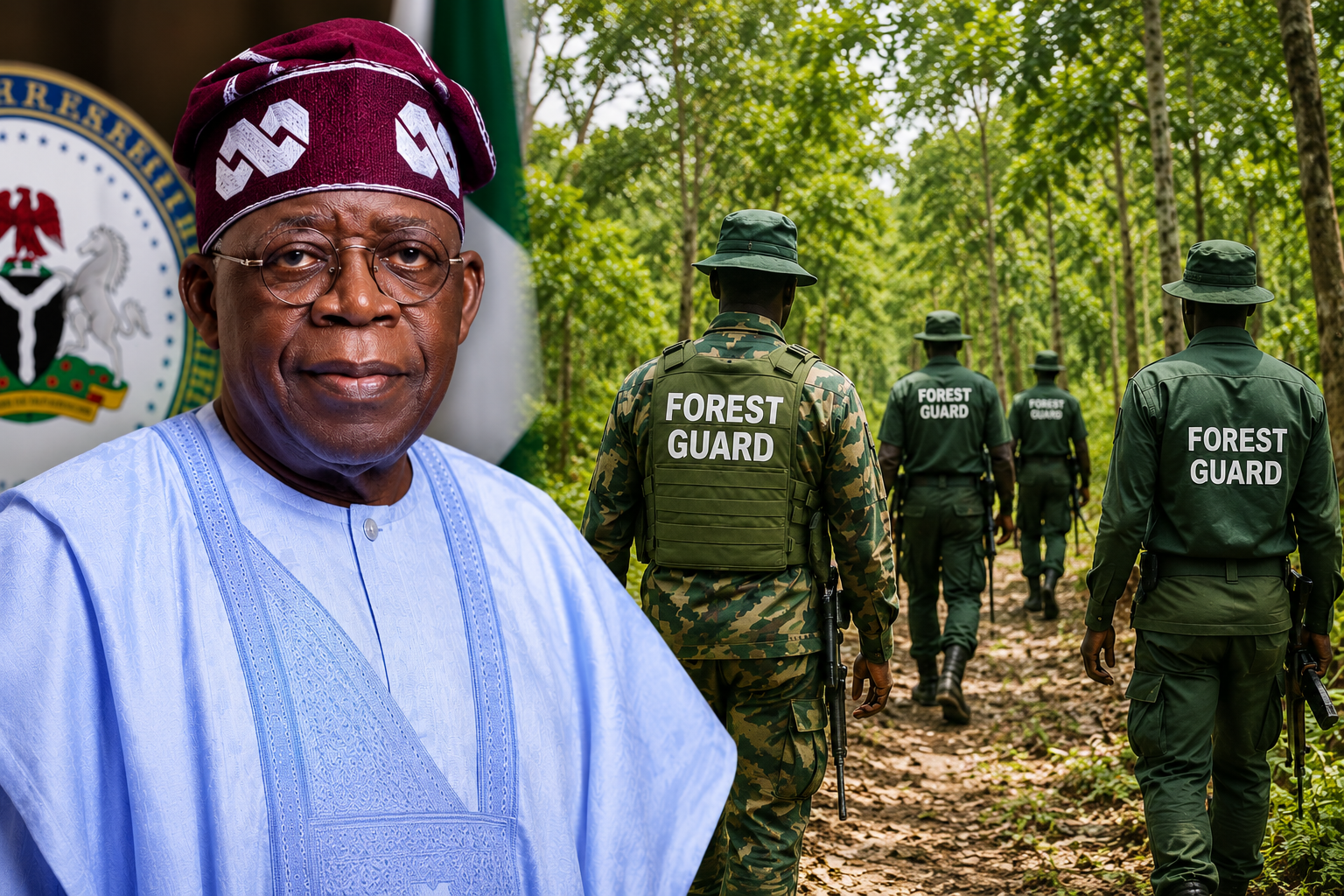
Tinubu Authorizes Hiring of 1,000 Forest Guards to Strengthen Security in Katsina
President Bola Ahmed Tinubu has approved the recruitment of 1,000 forest guards in Katsina State as part of a broader effort to tackle insecurity, protect rural communities, and reclaim forest areas that have increasingly become hideouts for criminal elements across the region.
The approval marks another significant step in the Federal Government’s ongoing campaign against banditry, kidnapping, and other security threats that have continued to affect communities in parts of Northern Nigeria. Katsina State, one of the states most impacted by armed bandit attacks in recent years, is expected to benefit substantially from the initiative.
The recruitment drive is designed to strengthen surveillance and security operations within forest reserves and remote areas that have often served as operational bases for criminal gangs. Security experts have long identified forests across parts of the North-West as strategic locations used by armed groups to plan attacks, evade security forces, and hold kidnapped victims.
Government officials say the newly recruited forest guards will work closely with conventional security agencies, including the military, police, civil defence personnel, and local intelligence networks to improve security coordination and response capabilities.
The initiative comes at a time when the Federal Government is intensifying efforts to restore peace and stability in regions affected by insecurity. Since assuming office, President Tinubu has repeatedly emphasized the need for a multi-layered security approach that combines military operations, intelligence gathering, community engagement, and economic development.
According to officials familiar with the programme, the forest guards will undergo specialized training before deployment. The training is expected to focus on surveillance techniques, intelligence collection, forest navigation, emergency response, and collaboration with security agencies.
Observers note that the decision reflects a growing recognition of the strategic role local security structures can play in supporting national security efforts. Unlike conventional security personnel who may not always possess detailed knowledge of local terrain, forest guards are expected to leverage their familiarity with the environment to provide valuable intelligence and operational support.
Security analysts have consistently argued that criminal groups have exploited difficult terrains and vast forest corridors to sustain their activities. By establishing a dedicated force focused on monitoring and securing these areas, authorities hope to disrupt criminal networks and deny them safe havens.
The recruitment is also expected to create employment opportunities for young people across Katsina State. Youth unemployment has often been cited as one of the socio-economic factors contributing to insecurity in some communities. Government officials believe that providing lawful employment opportunities can help reduce vulnerability to criminal recruitment while contributing to local economic development.
Residents in several affected communities have welcomed the initiative, expressing hope that enhanced security presence around forest zones will help reduce attacks and improve public confidence. For many rural dwellers, insecurity has disrupted farming activities, limited movement, and affected livelihoods over the years.
Agriculture remains a major source of income for communities across Katsina State. However, persistent attacks by armed groups have forced many farmers to abandon farmlands or scale back agricultural activities due to safety concerns. Improved forest security could therefore have broader economic implications by encouraging farming activities and supporting food production.
The initiative aligns with ongoing efforts by state governments and federal authorities to strengthen grassroots security structures. In recent years, various states have adopted community-based security measures aimed at complementing the work of formal security agencies. While challenges remain, supporters argue that locally driven approaches can significantly improve intelligence gathering and early warning systems.
Experts caution, however, that the success of the programme will depend largely on effective implementation, adequate funding, proper training, and continuous oversight. They stress the importance of ensuring that recruited personnel operate within established legal frameworks and maintain professional standards.
Some analysts also emphasize the need for sustained collaboration between security agencies and local communities. Trust and cooperation between residents and security operatives are often considered critical factors in addressing security challenges, particularly in rural areas where local knowledge can play a decisive role in preventing attacks.
The Federal Government has in recent months introduced several measures aimed at strengthening national security architecture. These efforts include enhanced military operations, procurement of security equipment, intelligence-sharing initiatives, and support for community-based security arrangements.
For Katsina State, the approval of 1,000 forest guards represents both a security intervention and a socio-economic opportunity. The initiative is expected to boost local employment while reinforcing efforts to safeguard communities from criminal activities.
As recruitment processes begin, attention will likely focus on how quickly the programme can be implemented and the impact it will have on security outcomes across affected areas. Many residents hope the move will contribute to lasting peace, improved safety, and renewed economic activities in communities that have endured years of insecurity.
The decision underscores the administration’s commitment to addressing security challenges through a combination of federal support, local participation, and targeted interventions. While the fight against insecurity remains complex, the deployment of trained forest guards could become an important component of broader efforts to restore stability and protect lives and property in Katsina State and beyond.
With expectations high among residents and stakeholders, the coming months will provide a clearer picture of how the initiative contributes to ongoing security operations and whether it can help deliver the safer environment that communities across the region have long sought.
