
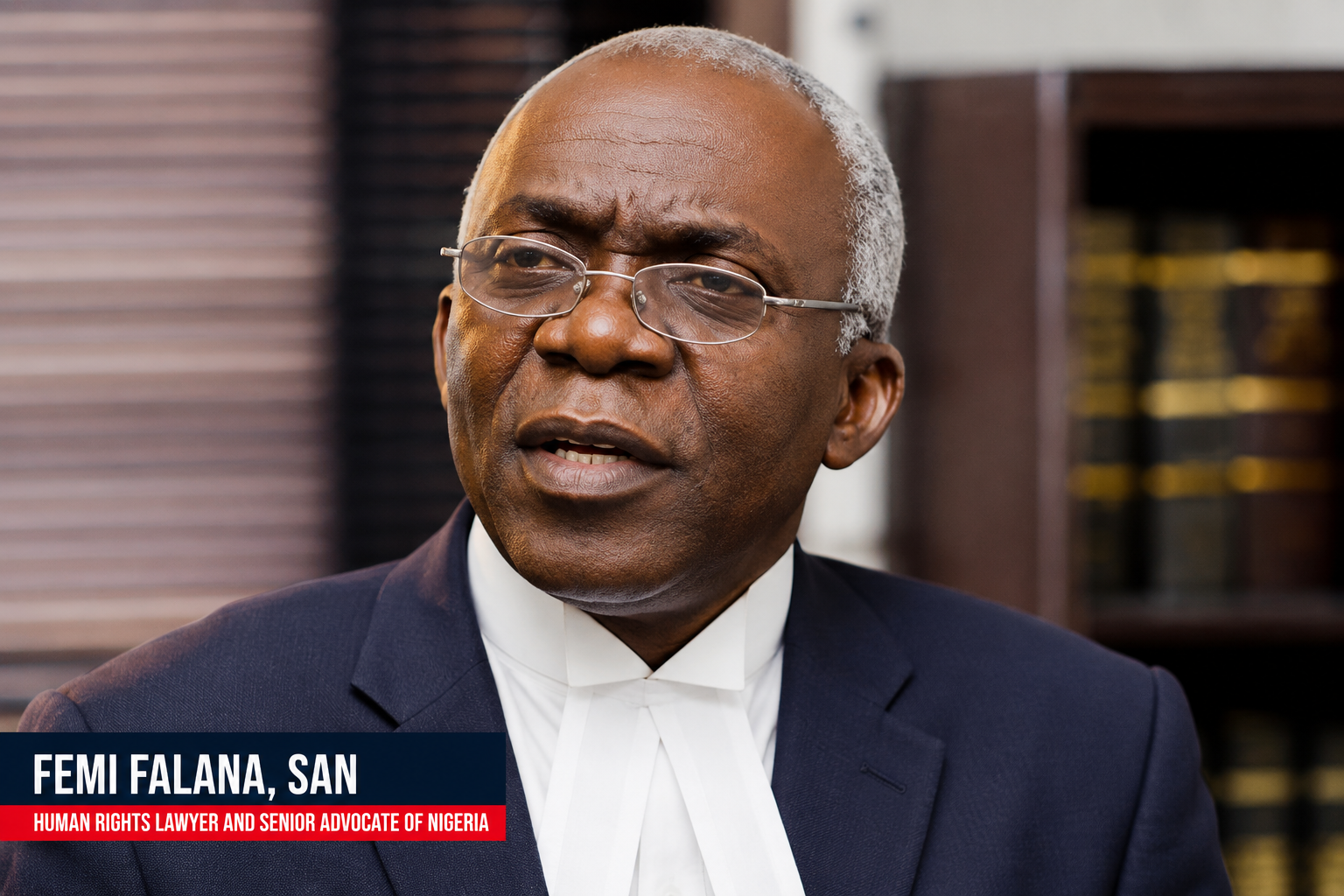
ABUJA, Nigeria — Senior Advocate of Nigeria (SAN) and renowned human rights lawyer, Femi Falana, has initiated legal action against the Nigerian Senate over its alleged failure to release a report concerning financial discrepancies amounting to more than ₦210 trillion in the audited accounts of the Nigerian National Petroleum Company Limited (NNPCL).
The lawsuit, filed before the Federal High Court in Abuja, has reignited public debate about transparency, accountability, and the management of Nigeria’s oil wealth. The legal challenge comes amid growing calls from civil society organizations, anti-corruption advocates, and concerned citizens demanding greater openness in the handling of public resources.
At the center of the controversy is a report compiled by the Senate Public Accounts Committee following an examination of NNPCL’s audited financial statements spanning several years. While lawmakers reportedly conducted extensive reviews of the documents, the final findings have not been made publicly available, prompting concerns about transparency in one of Nigeria’s most strategic sectors.
Falana’s Push for Transparency
Falana’s lawsuit seeks a judicial order compelling the Senate to release the report to the Nigerian public. According to the senior lawyer, the information contained in the document is of significant public interest because it relates to the management of national resources and the financial activities of a government-owned enterprise.
The legal action is anchored on the principle that citizens have a constitutional and statutory right to access information held by public institutions. Falana argues that withholding the report undermines democratic accountability and deprives Nigerians of the opportunity to scrutinize matters that directly affect the country’s economic wellbeing.
For years, Falana has been one of the country’s most vocal advocates for transparency in governance. His latest court action continues a longstanding campaign aimed at ensuring that public institutions operate openly and remain answerable to citizens.
The suit is expected to test the limits of public access to legislative records and could establish important legal precedents regarding the disclosure of parliamentary investigations.
Understanding the Alleged ₦210 Trillion Discrepancies.
The controversy surrounding the NNPCL accounts emerged after lawmakers reportedly identified financial entries and transactions that required further clarification during reviews of the company’s audited reports.
The figure of approximately ₦210 trillion has generated widespread public attention because of its enormous scale. However, it is important to note that the amount has not been officially established as missing funds, stolen money, or proven financial losses.
Rather, the figure reportedly relates to discrepancies, unresolved entries, or transactions that lawmakers sought explanations for during their examination of the company’s records.
Financial experts have cautioned against drawing premature conclusions before the complete report is released and independently assessed. They argue that large figures appearing in audit reviews often require detailed technical interpretation and may involve accounting classifications, liabilities, revenue recognition issues, or other financial adjustments.
Nevertheless, the magnitude of the figure has heightened public interest and intensified demands for full disclosure.
Why the Senate Report Matters
The Senate Public Accounts Committee serves as one of the National Assembly’s most important oversight mechanisms. Its responsibilities include examining public accounts and ensuring that government agencies manage resources in accordance with established laws and regulations.
When the committee conducts investigations into the finances of public institutions, its findings can influence policy reforms, trigger additional investigations, or result in recommendations for corrective actions.
Observers argue that withholding the report risks undermining public confidence in legislative oversight. Transparency advocates maintain that releasing the findings would allow citizens, experts, and stakeholders to independently assess the issues identified and contribute to informed public discourse.
The controversy has also raised broader questions about how parliamentary investigations are communicated to the public and whether legislative institutions should be required to proactively disclose reports involving matters of significant national interest.
NNPCL’s Strategic Importance to Nigeria
As Nigeria’s national oil company, NNPCL occupies a central position in the country’s economy. Revenue generated from petroleum resources contributes significantly to government finances and supports public spending across multiple sectors.
Because of this strategic role, the company’s financial operations are often subjected to heightened scrutiny from policymakers, investors, civil society organizations, and international observers.
Over the years, successive administrations have promised reforms aimed at improving transparency and efficiency within the oil and gas sector. The enactment of the Petroleum Industry Act (PIA) was widely viewed as a major step toward modernizing the industry’s governance framework.
However, recurring concerns about accountability and public disclosure continue to dominate conversations about the management of Nigeria’s petroleum resources.
The current dispute involving the Senate report highlights the ongoing challenges associated with balancing commercial operations, regulatory oversight, and public accountability.
Legal Questions Before the Court
The Federal High Court is expected to examine several key issues as the case progresses.
One major question is whether the Senate can lawfully withhold a report concerning a matter of significant public interest after completing its investigative processes.
Another issue relates to the scope of citizens’ rights under Nigeria’s Freedom of Information framework and whether legislative records fall within categories of information that should be accessible to the public.
Legal analysts say the outcome could have implications beyond the immediate dispute. A ruling in favor of disclosure may strengthen public access to government-held information and encourage greater transparency across public institutions.
Conversely, a decision supporting the Senate’s position could reinforce the discretion of legislative bodies regarding the publication of committee findings.
Regardless of the eventual outcome, the case is likely to attract considerable public attention because of its implications for governance and accountability.
Growing Public Demand for Openness
The lawsuit arrives at a time when Nigerians are increasingly demanding greater transparency in public administration.
Economic challenges, rising living costs, and concerns about public spending have intensified calls for institutions to provide clearer information regarding the management of national resources.
Civil society groups have repeatedly emphasized that access to information is essential for combating corruption, promoting accountability, and strengthening democratic governance.
Many observers view the current legal battle as part of a broader effort to ensure that public institutions remain answerable to citizens.
The case has also sparked extensive discussions on social media platforms, where Nigerians continue to debate the significance of the alleged discrepancies and the importance of releasing the report.
What Happens Next?
As the matter proceeds through the courts, attention will focus on the responses of both the Senate and NNPCL, as well as any documents that may emerge during the litigation process.
The court’s eventual ruling could determine whether Nigerians gain access to information that has become the subject of intense national interest.
For now, the case represents more than a dispute over a single report. It has evolved into a broader conversation about transparency, accountability, and the public’s right to know how national resources are managed.
Whether the lawsuit ultimately results in the release of the report or not, it has already succeeded in bringing renewed attention to the importance of openness in public institutions and the ongoing quest for greater accountability in Nigeria’s governance system.
